It is a loyalty program that seeks to create a global community deeply committed to exploring and conserving remote territories. With benefits carefully designed for its members, ECHO seeks to enhance knowledge and connection with nature to achieve a positive impact on the planet.

Knowledge and deep connection
We research, monitor and curate up-to-date, in-depth, scientific content to deepen your knowledge of the destinations.

Benefits designed to go deeper
We offer you benefits and experiences carefully designed for you to expand your commitment to exploration, connection, knowledge and the conservation of territories.

Be part of a community with a purpose
We have created a community that connects passionate people with extraordinary initiatives in remote territories.
HOW DO WE CONTRIBUTE TO CONSERVATION IN OUR TERRITORIES?
Dissemination
We inform on conservation projects and initiatives in the territories we are in, showing progress and value propositions from the many organizations present.
Financing
A % of the income from your stay will finance local conservation and sustainability projects or initiatives.
Creation
We co-create and develop innovative projects in partnership with local communities and organizations.
PROJECTS WE CONTRIBUTE TO
Up to 15% of the cost of your stay will go to support projects where our destinations are located Get to know some of them:
PARQUE NACIONAL PATAGONIA
- Ethnobotanical Garden: The first Ethnobotanical Garden in the Aysén Region was born at the Hospital de Cochrane, transforming its unused courtyards into living spaces that connect health, nature, and ancestral knowledge. The garden houses the first museographic collection of medicinal and ethnobotanical plants from the Patagonian steppe, developed through a participatory process involving local communities, indigenous groups, public institutions, and conservation experts. Through the intersection of art, science, medicine, and traditional knowledge, the project promotes ex-situ conservation of native flora, environmental education, and nature-based wellbeing for patients, hospital staff, and the broader community of the Baker Basin.
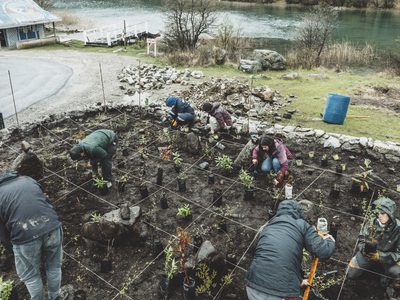
- Amphibious Forest: Amphibious Forest is an ecological restoration initiative developed by Fundación Naturaleza Pública in partnership with Club Náutico Escualo in Cochrane. Through a community-driven methodology, children, families, athletes, and local organizations participate in the full regeneration cycle — from native seed collection and plant production to long-term planting and monitoring. In its first phase, the project restored 235 m² through the planting of 915 specimens from 22 native Patagonian species, strengthening local biodiversity and improving the riparian habitat along the Cochrane River. More than a planting initiative, Amphibious Forest transforms everyday spaces into living laboratories where nature, education, and community action come together.
TORRES DEL PAINE
- Chile Lagos Limpios: In partnership with Fundación Chile Lagos Limpios and UC Davis, Explora launched a scientific tourism program in Torres del Paine National Park focused on water quality monitoring. Guests are invited to participate in monthly measurements of transparency and water conditions in lakes Pehoé and Sarmiento and the Serrano River, contributing to a long-term baseline dataset analyzed by one of the world’s leading freshwater research institutions. Explora guides received specialized environmental monitoring training, integrating the scientific approach into their daily expeditions across the park. The initiative transforms each visit into an act of conservation, turning guests into active stewards of one of Patagonia’s most pristine ecosystems.
EL CHALTÉN
- Association of Friends of the Los Glaciares National Park: By supporting this partnership, Explora joins the local community’s efforts to protect the incredible environmental heritage of the Los Glaciares National Park and improve the quality of trails and the visitor center.
RAPA NUI
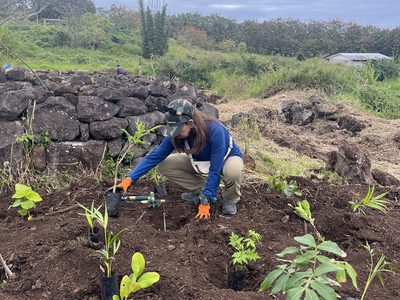
- Toki Forest: In a joint effort to restore ecosystems and strengthen environmental education on the island, Explora partnered with CONAF and Bosko to plant the first fast-growth forest in Rapa Nui, inspired by the Japanese Miyawaki method. Located at the Toki School of Music and Arts, the pilot project covers 200 square meters and includes 500 plants from 20 species, many of them of Polynesian origin and deep cultural significance, alongside native species under threat. The planting brought together students, local community members, and conservation experts in a shared effort to restore degraded soil, protect biodiversity, and strengthen the island’s bond with its natural heritage.
SACRED VALLEY & MACHU PICCHU
- ECOAN PERU (Andean Ecosystems Association): Over the last few years, Explora has been supporting ECOAN’s work in the development of community nature reserves, especially through the financing of seedlings and their planting in the community of Cancha Cancha. We are now actively working to resume our support for local environmental and cultural initiatives.
ANDEAN REGION
- Terevaka Archaeological Outreach: After many years as an iconic educational program for young people from Rapa Nui, Explora forged an alliance with the Terevaka Foundation and expanded it to the Sacred Valley and Atacama. Local communities in these destinations will now be able to conduct field research on crucial environmental and cultural issues, allowing them to explore their own heritage in depth.
-

PARQUE NACIONAL PATAGONIA
- Ethnobotanical Garden: The first Ethnobotanical Garden in the Aysén Region was born at the Hospital de Cochrane, transforming its unused courtyards into living spaces that connect health, nature, and ancestral knowledge. The garden houses the first museographic collection of medicinal and ethnobotanical plants from the Patagonian steppe, developed through a participatory process involving local communities, indigenous groups, public institutions, and conservation experts. Through the intersection of art, science, medicine, and traditional knowledge, the project promotes ex-situ conservation of native flora, environmental education, and nature-based wellbeing for patients, hospital staff, and the broader community of the Baker Basin.
- Amphibious Forest: Amphibious Forest is an ecological restoration initiative developed by Fundación Naturaleza Pública in partnership with Club Náutico Escualo in Cochrane. Through a community-driven methodology, children, families, athletes, and local organizations participate in the full regeneration cycle — from native seed collection and plant production to long-term planting and monitoring. In its first phase, the project restored 235 m² through the planting of 915 specimens from 22 native Patagonian species, strengthening local biodiversity and improving the riparian habitat along the Cochrane River. More than a planting initiative, Amphibious Forest transforms everyday spaces into living laboratories where nature, education, and community action come together.
TORRES DEL PAINE
- Chile Lagos Limpios: In partnership with Fundación Chile Lagos Limpios and UC Davis, Explora launched a scientific tourism program in Torres del Paine National Park focused on water quality monitoring. Guests are invited to participate in monthly measurements of transparency and water conditions in lakes Pehoé and Sarmiento and the Serrano River, contributing to a long-term baseline dataset analyzed by one of the world’s leading freshwater research institutions. Explora guides received specialized environmental monitoring training, integrating the scientific approach into their daily expeditions across the park. The initiative transforms each visit into an act of conservation, turning guests into active stewards of one of Patagonia’s most pristine ecosystems.
EL CHALTÉN
- Association of Friends of the Los Glaciares National Park: By supporting this partnership, Explora joins the local community’s efforts to protect the incredible environmental heritage of the Los Glaciares National Park and improve the quality of trails and the visitor center.
-
RAPA NUI
- Toki Forest: In a joint effort to restore ecosystems and strengthen environmental education on the island, Explora partnered with CONAF and Bosko to plant the first fast-growth forest in Rapa Nui, inspired by the Japanese Miyawaki method. Located at the Toki School of Music and Arts, the pilot project covers 200 square meters and includes 500 plants from 20 species, many of them of Polynesian origin and deep cultural significance, alongside native species under threat. The planting brought together students, local community members, and conservation experts in a shared effort to restore degraded soil, protect biodiversity, and strengthen the island’s bond with its natural heritage.
-
SACRED VALLEY & MACHU PICCHU
- ECOAN PERU (Andean Ecosystems Association): Over the last few years, Explora has been supporting ECOAN’s work in the development of community nature reserves, especially through the financing of seedlings and their planting in the community of Cancha Cancha. We are now actively working to resume our support for local environmental and cultural initiatives.
ANDEAN REGION
- Terevaka Archaeological Outreach: After many years as an iconic educational program for young people from Rapa Nui, Explora forged an alliance with the Terevaka Foundation and expanded it to the Sacred Valley and Atacama. Local communities in these destinations will now be able to conduct field research on crucial environmental and cultural issues, allowing them to explore their own heritage in depth.