Expedición Tierra del Fuego: Una luz transformadora en la Patagonia
Siempre he dicho que la Patagonia tiene una luz particular. No es más brillante ni más suave, solo distinta. En Tierra del Fuego se siente más nítida, más intencional, como si revelara el paisaje por capas en lugar de mostrarlo todo de una vez. Esa luz enmarcó mi experiencia como Team Leader en la última Expedición a Tierra del Fuego: un viaje nómade de siete días, por una de las zonas menos visitadas de la Patagonia chilena.
Esta expedición nos llevó por lugares de la isla que siguen siendo, en gran medida, desconocidos, incluso para viajeros con mucha experiencia. En el lado chileno de Tierra del Fuego no hay multitudes ni circuitos establecidos. En cambio, es la naturaleza y su inmensidad lo que predomina, dejando a la presencia humana en un segundo plano.
Éramos un grupo pequeño, cuatro viajeros acompañados por el equipo de expediciones de Explora. Muy pronto se instaló un ritmo compartido: exploraciones sin apuro al aire libre y conversaciones que, día a día, se volvían más profundas. En una sola semana pasamos de la pampa patagónica abierta al bosque subantártico y luego a fiordos enmarcados por la presencia glaciar de la Cordillera de Darwin. Tierra del Fuego pide algo simple: atención plena.
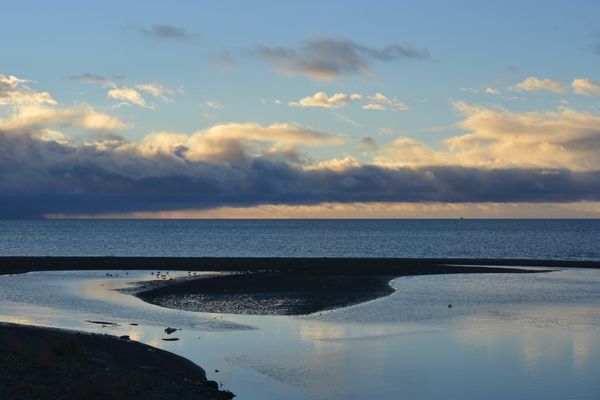
From Punta Arenas, we could already see Tierra del Fuego across the water. The crossing took about two hours, and the day greeted us with a rare gift in Patagonia: sun and almost no wind, ideal for staying on deck and taking in the widening horizon.
It felt like a clear line between what was familiar and what was remote. And as we headed toward the island, it was hard not to feel we were stepping into something entirely new. Just before we reached shore, a few Commerson’s dolphins surfaced alongside the boat and then disappeared again, a brief reminder that, out here, we were visitors.
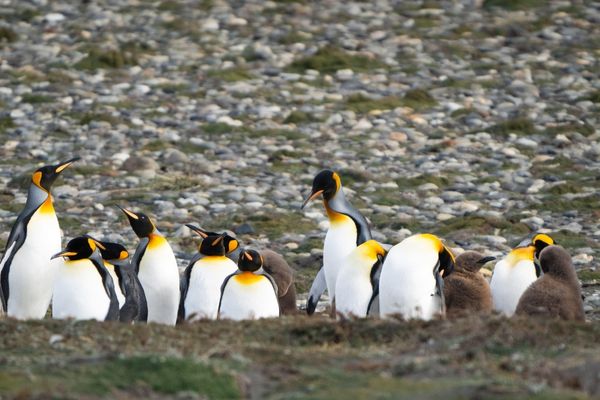
Not long after, we stopped at Bahía Inútil, home to the only king penguin breeding colony on the South American continent. The adults were imposing—nearly three feet tall—with black backs, bright white chests, and those unmistakable golden and orange markings at the neck.
Among them, the chicks were mid-change: almost full-sized, still wrapped in brown down, with patches where new feathers were coming through. Near the shoreline, a few hesitated at the edge before stepping into the water, wobbly for a second, then suddenly sure. Around us, the colony’s calls formed a constant chorus. It was unforgettable and completely wild.
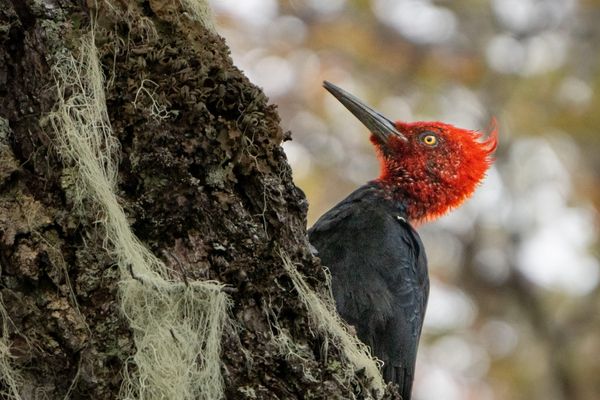
From there, the expedition turned south and the island changed character. In the north, the pampa had felt exposed—wind-driven, dry, and wide open. However, as we drew closer to the Darwin Range, the air cooled and the landscape tightened. In Karukinka, lenga and ñirre forests took over: damp undergrowth, filtered light, lichens hanging from branches, and a quiet that slowed us down without asking.
It was hard not to think about the people who moved through these same environments long before us: Selk’nam across the interior, and Yagán through the channels, adapting to cold, tides, and a coastline that offers little shelter. Later came sheep ranching and estancias, and the island’s human story shifted again.
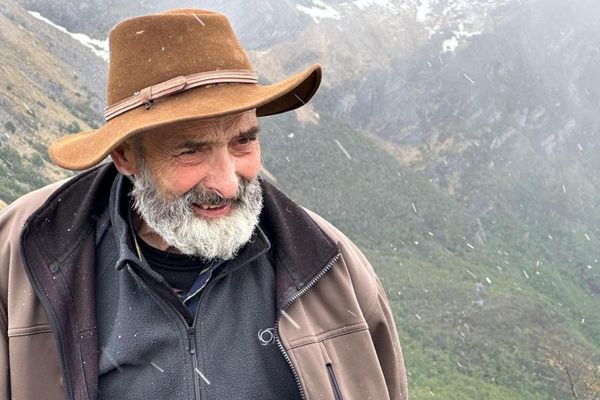
We experienced that continuity firsthand when we arrived at Estancia Lake Fagnano, where we were hosted by Don Germán Genskowsky and his family—among the last settlers living in this far southern corner.
In a place where, for years, access was limited and everything had to be built with what you could bring in, their welcome didn’t feel staged. It felt lived-in. Don Germán showed us photographs and documents he had gathered over decades, keeping the island’s recent history tangible and local memory alive. It was one of those rare moments that grounded the entire expedition. We weren’t only moving through landscapes; we were stepping into the island’s living history.
Toward the Darwin Range
What followed became the expedition’s turning point: navigating Parry Fjord on a rare calm day. The Darwin Range rose ahead with colossal walls of ice. We heard the low thunder of glaciers calving, seabirds circling above the channel, and then—unmistakably—a leopard seal resting on an iceberg, unbothered and perfectly at home.
No one rushed to speak.
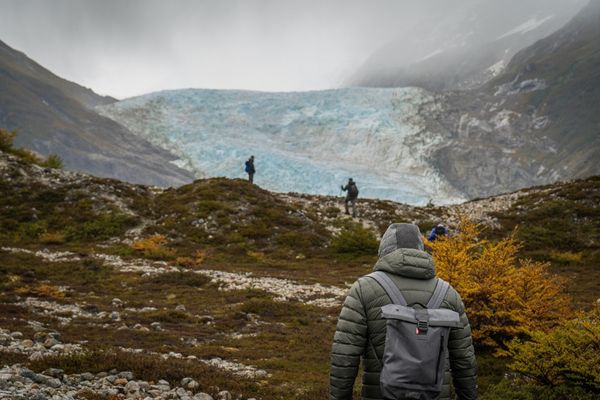
We let the moment settle. Later, we stepped ashore for a hike that brought everything closer. After hours on the water, walking toward the glacier shifted the perspective—the ice was no longer something in the distance. It filled the valley ahead, and every step made its scale feel more real.
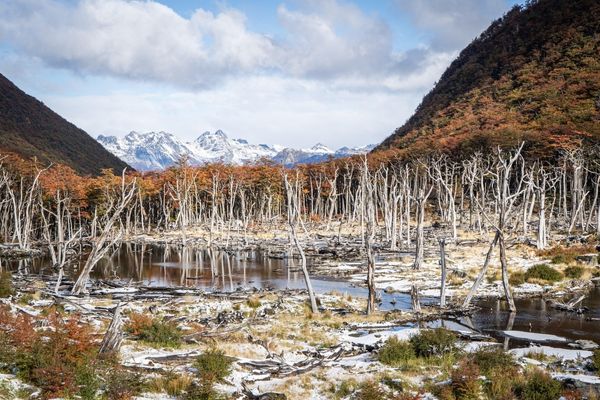
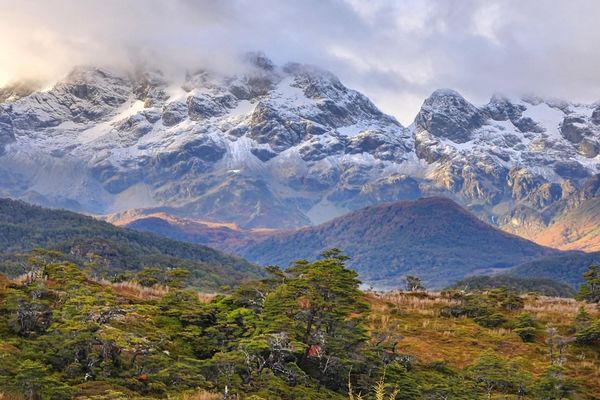
We also explored Yendegaia National Park, and the first thing that stood out was the color. It kept shifting: deep green lenga and ñirre forest, copper and rust-toned peatlands, and snow-dusted peaks appearing and disappearing as the light moved.
There weren’t clear trails in the way most parks have them. Instead, peat, moss, and cushion plants absorbed each step and naturally slowed the group. Everyone moved in their own rhythm. Some travelers stayed focused on the route ahead; I kept looking down, drawn into the miniature world underfoot—quiet layers of life building over time.
By the end of the expedition, what stayed with me wasn’t only the sequence of places, but the shift in pace, a quieter way of moving through a landscape that never tried to impress, only to exist on its own terms. Tierra del Fuego asked for presence, and in return it opened space for introspection. At the end of the world, the light truly changes, illuminating not just the landscape, but something within us. Tierra del Fuego reminds us why we travel: to feel small before vast beauty, to connect meaningfully.
There are places that shift something within you, almost imperceptibly at first, until you realize that you’ve changed. Because when the journey ends, what stays with us isn’t just the place, it’s the transformation it awakens.
By Camila Chamorro, Explora’s Expedition Experience Manager.